Soft Tissue Therapy
What is Soft Tissue Therapy?
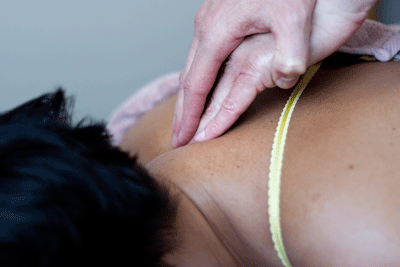
In a nutshell, Soft Tissue Therapy is remedial massage on steroids. It is targeted clinical massage. It is hands on bodywork that can get you out of many kinds of painful episodes.
Soft Tissue Therapy reduces tensile and compressive stress on your body tissues and can dramatically speed up the healing process.
‘Soft tissue’ refers to the type of body structures that are targeted in a treatment session.
These soft tissue structures include:
- Muscles, tendon and ligaments,
- Fascia (superficial and deep)
- Fluids such as blood, lymph, interstitial fluid (between cells)
- Arteries, veins, lymph nodes and channels.
- Nerves and motor programs (brain maps that direct movement/ dysfunctional patterns)
Soft Tissue Therapy has been born out of remedial massage, structural bodywork, sports massage and injury rehabilitation. The assessment procedures and the techniques used are universal to Physiotherapy. However, many techniques are unique to Soft tissue therapy.
What conditions respond well to soft tissue therapy?
Conditions that respond especially well to soft tissue therapy include but are not limited too:
- Random muscle aches and pain that move around the body
- Neck and lumbar spine disc bulges.
- Poor posture- rounded shoulders and sway backs
- Functional and structural scoliosis of the spine
- Growing pains in children and adolescents
- Thoracic outlet syndrome
- Muscle tears
- Tendon and bursitis conditions
- The need to increase range of motion for various sports eg. Shoulder and thoracic spine flexibility for snatch in olympic weight lifting.
- Computer posture and repetitive strain injuries
- Tennis and golfers elbow
- Plantar fasciitis
- Whiplash
- Many kinds of nerve conditions in the neck, lumbar spine, arms and legs
- Tension headaches and some migraines.
- Erasing Compensation patterns post injury and post surgery.
- Post joint surgeries (once Surgeon/Physio approval has been given)
- Adrenal fatigue and central fatigue (nervous system burnout)
- Unusually rigid tight muscles throughout the body.
- Also, most conditions being over seen by a Physiotherapist, Podiatrist, Chiropractor or Osteopath.
How many sessions are needed?
A major strength of Soft Tissue Therapy is its ability to make an instant difference in pain levels and body comfort in the first session. This occurs 95% of the time. Further treatments will continue the release process. Significant relief is attained in many problems within 3-4 treatments.
What techniques are used?
Many Soft Tissue Therapists have a variety of skill sets to draw from to help you get out of pain and move better. These can include:
• Nerve pain reduction techniques
• Swedish and remedial massage techniques
• Trigger point therapy
• Myofascial release techniques
• Kinesiotaping techniques
• Manual Lymphatic drainage techniques
• Pelvic mal-alignment correction techniques
• Fatigue recovery techniques
• Sports and injury massage
• Dry needling techniques for faster resolution of injuries.